Showing posts with label The Woman with the Bouquet. Show all posts

Tuesday, September 16, 2014

Pushpak K. reviews "The Woman with the Bouquet" by Eric-Emmanuel Schmitt


“Ever has it been that love knows not its own depth until the hour of separation.” 
- Khalil Gibran
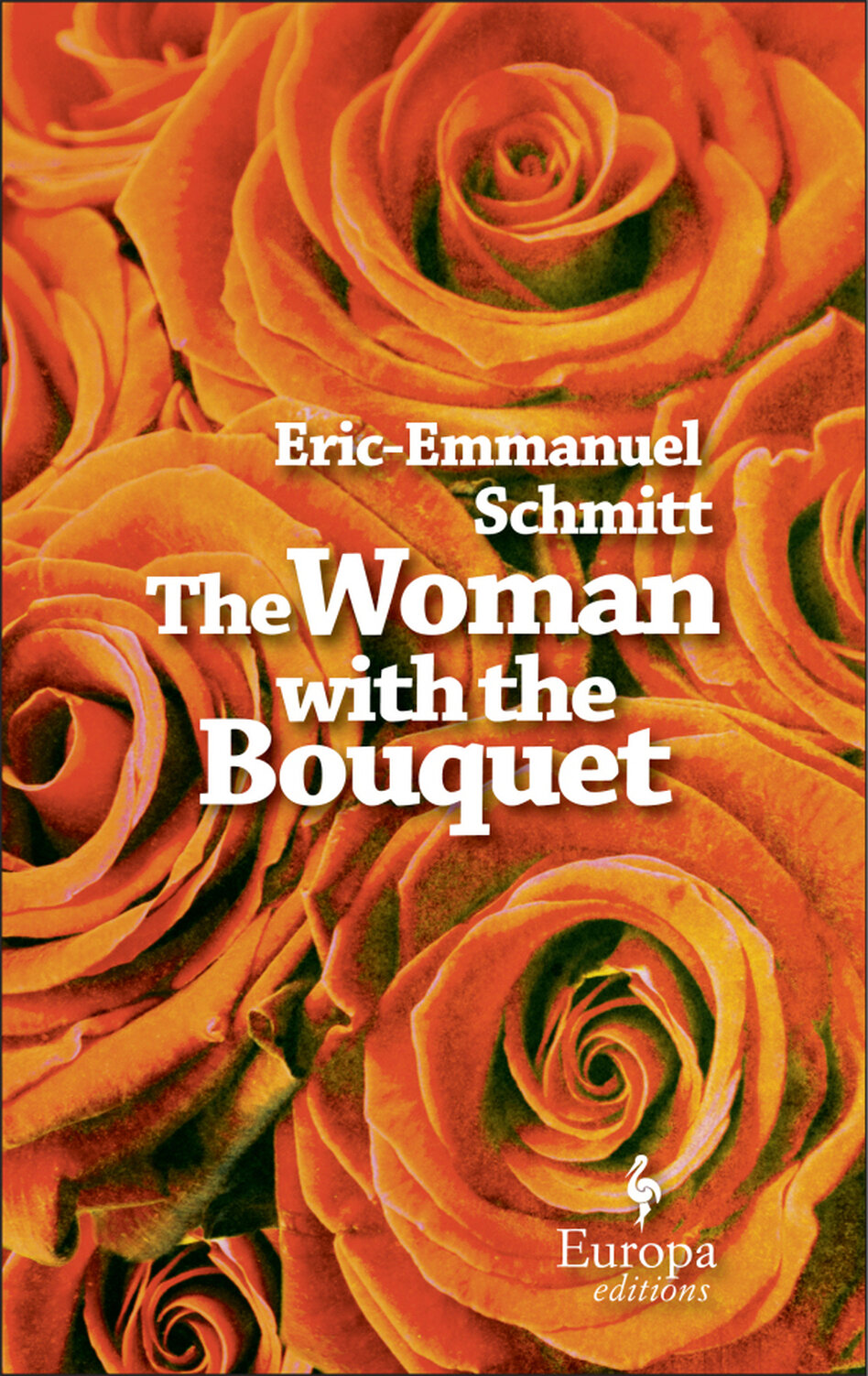


Of all the complex emotions that separate the homo sapiens from the rest of the species, love remains - after a millennia of evolution - the hardest to define, yet the simplest to experience. History overflows with reams of parchment, ink, musical notes, paint and countless other media that have all been employed by artists in the single-minded pursuit of this elusive wisp. But, as in the tale of the blind men and their elephant, our perception of love, when viewed through the lens of such works, gives us but a tiny glimpse into the mysterious machine that fuels most of our existence.

Eric Emmanuel-Schmitt's "The Woman with the Bouquet" is a superlative collection of short stories (and a novella) that take us on a tour of this enigmatic landscape, but forgoes all the tourist traps. This is a journey through the wilder, somewhat darker and deeper parts of human psyche that shake, jolt, rattle and in general string us up in the most surprising ways possible. We emerge bloodied, battle scarred (for life), albeit richer in our ability to experience and understand the various facets of love. Make no mistake though - you will lose a part of yourself in these stories - you will never be whole again! And that, is a GOOD thing!

We encounter "The Dreamer from Ostend" in the opening novella, an old woman who refuses to move with time. Surrounding herself with books of classic literature, she refuses to open a door to any contemporary influence, clinging on to her only remaining thread to a past that was filled with love. Until, she encounters the narrator, a young writer who has come away from his past after a romantic breakup. After a few terse encounters, she finally relents and opens up to him about her past - a life so full of fantastical incidents that he refuses to believe in them, until it is too late.

In "Perfect Crime," Schmitt tackles the difficult transition of insecure, lifelong love morphing into a deadly obsession, and the tragedy that inevitably results from such a change. Without spoiling the story, suffice it to say that it has a bittersweet ending that may stay with you for a long long time.

"Getting Better" is a double entendre that describes the two protagonists in the story about a blind, paralyzed patient and his plain-jane Parisian nurse. Their encounter sets up a chain of events that irrevocably changes their lives, perhaps for the better?

"Trashy Reading" is a tragicomedy, a black satire on the effects of a lifetime of abstinence and the flood of complex emotions that usually follows a brief exposure to the forbidden substance. Schmitt is masterful in this tale, weaving a fast-paced narrative through the world of an uptight, bibliophile professor who is initiated into The Chamber of Dark Secrets, by his cousin on a holiday trip.

The final story is the titular tale of a woman who has been showing up on a platform in Zurich station, a bouquet in her hand, for fifteen years. Who is she waiting for, and why wait for such a long time? Schmitt channels the reader's curiosity through the eyes of a group of young adults who speculate if her daily ritual is a sign of loyalty or a desperate plea of resignation? Although the smallest story in terms of pages, it is also the deepest exploration of the subject by the author.

Alison Anderson works up her magic translator machine once again, and delivers the narration in an almost lyrical prose that captures the ethos of the stories, while resisting the easy slide into mushy-ness. The prose is hard-hitting, and visceral, with a calculated effort to translate not only Schmitt's words, but his style de narration.

Highly recommended!

Friday, May 11, 2012

The Woman with the Bouquet by Éric-Emmanuel Schmitt

The Woman with the Bouquet
This classic collection of stories by Schmitt are so reminiscent of great short story writers of the past, e.g., du Maupassant, Poe, Bierce, that one irresistibly turns to see when it was published. Originally called La rêveuse d'Ostende and published in 2007, the stories have the feel of institutions already, for they highlight human motivations and peculiarities no matter what the period of time.

A favorite story, “Perfect Crime,” so completely captures a person’s frustration with their spouse and their ill-thought-out revenge, that one feels this cautionary tale is as sure to stay in one’s memory as long any life lesson personally learned in far more painful fashion.

“The Dreamer from Ostend” was the longest in the collection and felt positively Victorian in its shocking eroticism and the measured revelation of long-buried secrets tightly guarded. It reminds one of the stimulative power of a long, slow strip tease.

The corrupting influences of fiction are addressed in “Trashy Reading,” and one who has ever shivered in fear on a dark and windy night can attest to the force of imagination in keeping us alert and prepared just in case…

Our imagination is also under the microscope in the title story, for when presented with a conundrum we readers will bring to bear our experiences and fears and our deepest emotions in solving the mystery. Schmitt thus shows us how writing the story is only half the show, while reading it--with the attendant imaginative constructions--is at least as important. It is the author acknowledging us readers with a bow that makes us lower our eyes in embarrassment and delight. Kudos right back, Schmitt! This classic collection of stories is sure to delight many.


Paperback, 224 pages. Published August 31st 2010 by Europa Editions Translated from the French by Alison Anderson.(Originally published 2007 by Éditions Albin Michel ISBN 9782226181 original title La rêveuse d'Ostende)

This book counts towards the 2012 Europa Challenge. The Bowed Bookshelf: The Woman with the Bouquet by Éric-Emmanuel Schmitt

Friday, January 6, 2012

Deb's reviews of Rancid Pansies by James Hamilton-Paterson & The Woman With the Bouquet by Eric-Emmanuel Schmitt

Hi all,

As promised, here are the reviews of my final two "Ami" level reads of 2011. You can read about the rest of my crazy December reading at bookconscious. Happy New Year!

In December, I read the third Gerald Samper book by James Hamilton-Paterson, Rancid Pansies. This one seemed as if it wasn’t going to be so funny when it opened — Gerald is living in England with friends, recovering from the loss of his Italian home in an earthquake. After getting good news about the sale of film rights for his last book, he prepares one of his horrid (and horrifying) gourmet conconctions for a dinner party and ends up inadvertantly poisoning the guests.

Shamed and distressed, he returns to Italy, along the way deciding his next project will be to write the libretto for an opera about Princess Diana. Whose name can be anagrammed into Rancid Pansies. His old neighbor Marta is back (her disappearance in the previous novel, Amazing Disgrace, was due to a gig writing a movie score in Hollywood) and agrees to write the opera’s music. Several other characters from the earlier books appear as the hilarious plot unfolds.

I thought this was the most satisfying plot of the three Samper novels, again a farce, but with a tighter story line that really moved along. It may also have been the funniest, although I thought Cooking With Fernet Branca and Amazing Disgrace were also very funny. The scene in which Gerald has a cameo in the opening night of the opera playing Prince Phillip had me laughing out loud. And wishing the BBC would produce a mini series if they haven’t already.

The Samper trilogy were from Europa Editions, and was the thirteenth book in my 2011 Europa Challenge. I was going for fourteen, which was the Ami level. I reached my goal with another story collection, The Woman With the Bouquet by Eric-Emmanuel Schmitt. I liked the first story in the book, “The Dreamer of Ostend,” a love story with a mystery, in which the narrator isn’t sure what’s real and what’s fiction. And the title piece, which tells the story of a nurse who blossoms into her true self only after a blind patient convinces her she is beautiful.

For the 2012 Europa Challenge I’m aiming for Cafe Luongo Level, which means reading twelve Europa Editions. I have my first of the year, Margherita Dolce Vita by Stefano Benni, checked out of the library and am looking forward to getting started.

Friday, July 8, 2011

Marie's Review: The Woman with the Bouquet, by Eric-Emmanuel Schmitt

The Woman with the Bouquet, by Eric-Emmanuel Schmitt. Published 2010 by Europa Editions. Translated from the French by Alison Anderson.

A collection of five short stories by French writer Eric-Emmanuel Schmitt, The Woman with the Bouquet deals in secrets and mysteries and with people searching for meaning in their lives, often by trying to ferret out the secrets of others.

Most of the stories deal with love affairs, and often, a crime. In one, a writer listens to an elderly invalid tell an implausible story about a passionate affair she had with a prince; could it be true? But how? In another, an average-looking woman who finds herself ugly, falls for a blinded photographer, who, in finding her attractive, teaches her to love herself. Another woman kills her husband only to have second thoughts, and yet another waits at a train station every day, titular bouquet in hand. But for whom?

My favorite story though was the only one without a love affair at its center, "Trashy Reading," about a cynical professor who reads only highbrow nonfiction until he finds rapture between the covers of a potboiler detective story. On vacation with his beloved cousin, he steals her grocery-store page-turner and becomes engrossed in the adventures of a certain fetching, fictional lady detective, but the story transmits to him a growing anxiety, leading him to a tragic error of judgement and a terrible outcome for his innocent cousin. I liked the suspense built into this story; Schmitt had me turning the pages as fast as the luckless protagonist turned the pages of his fat thriller.

The rest of the stories are delightful, if somewhat similar to each other; "Getting Better," about a nurse infatuated with her blind patient, was also wonderful. It's a personal-transformation story about someone learning to see herself through someone else's eyes, until that viewpoint becomes her own. All of the stories have about them a sort of wistful romantic quality, and except for the poor leads of "Trashy Reading," there are lots of happy endings, too. The collection is a quick read; a story or two a day was a very doable pace for me and considering there are only five stories, I went through it in under a week. Europa fans and readers of short stories will want to add this one to their piles!

It's book one of fourteen towards my challenge goal of Europa Amante!